Correlation between body mass index and blood pressure among first-year undergraduate medical students in Punjab: A cross-sectional study
Correlation of BMI and BP among medical students in Punjab
 Crossmark
Revised : 2026-09-21
Accepted : 2026-09-21
Online : 2026-09-30
Print : 2026-09-30



Full text
Abstract
Obesity and hypertension are emerging public health concerns among young adults. Body mass index (BMI) is an important indicator of obesity and is associated with elevated blood pressure. Medical students are exposed to lifestyle risk factors such as academic stress, irregular dietary habits, physical inactivity and altered sleep patterns, which may influence both BMI and blood pressure. The study was conducted to find the correlation between BMI and blood pressure among first-year undergraduate medical students. This cross-sectional study was conducted among 300 first-year undergraduate students enrolled in MBBS and Allied Healthcare programs at Sri Guru Ram Das Institute of Medical Sciences and Research, Amritsar. Height, weight and blood pressure was recorded using standard methods and BMI was calculated. The mean BMI was 23.46 ± 4.55 kg/m2. The mean systolic blood pressure (SBP) and diastolic blood pressure (DBP) were 118.19 ± 9.47 mmHg and 75.99 ± 9.60 mmHg, respectively. Most participants had normal blood pressure (64.7%) while 32.7% were pre-hypertensive, and 2.7% (8 participants) had stage 1 hypertension (although participants with previously diagnosed hypertension were excluded at enrolment). Higher BMI was associated with increased systolic and diastolic blood pressure. A statistically significant moderate positive correlation was observed between BMI and SBP (rho = 0.674, p<0.001) and between BMI and DBP (rho = 0.681, p<0.001). The present study demonstrated a significant moderate positive correlation between BMI and blood pressure among first-year medical students. Early lifestyle modifications and regular health screening may help to reduce the future cardiovascular risk.
Keywords: Blood pressure, Body mass index, Medical students, Obesity
How to cite: Rashid U, Kaur D, Kaur S. Correlation between body mass index and blood pressure among first-year undergraduate medical students in Punjab: A cross-sectional study. Ann Med Physiol. 2026;9(1):1-7. doi: 10.23921/amp.2026v9i1.00079
Introduction
Background
Body mass index (BMI) is widely used an anthropometric measure to assess adiposity. It usually defines body fatness as an index of weight related to height and is generally considered a valid index of adiposity [1]. Increased BMI affects blood pressure (BP) of an individual which is an important indicator of cardiovascular health. Blood pressure is influenced by multiple factors like age, gender, genetics, lifestyle, stress and body composition. Elevated blood pressure and excess body weight at younger age is of particular concern because these risk factors may persist into later adulthood [2].
Although the association between BMI and blood pressure has been well documented in adults, studying this relationship in healthy young individuals is important because this is a period when lifestyle patterns and cardiovascular risk factors are still modifiable. Evidence from a study of 450 first-year undergraduate medical students in Northern India showed that 15.56% of students had hypertension and 40.67% had prehypertension, while 29.33% were overweight or obese. The study also reported a higher prevalence of hypertension and excess weight among male students. These findings indicate that elevated BMI and blood pressure can already be present during adolescence and early adulthood including college-going students [3].
The increasing occurrence of excess body weight and elevated blood pressure among young adults may be related to changes in lifestyle and sociocultural factors. Economic development, modernization, and urbanization have contributed to changes in daily living, including reduced physical activity, sedentary behavior, irregular eating patterns, inadequate sleep and increased consumption of energy-dense foods. These environmental and behavioral changes have been associated with the rising prevalence of obesity [4].
Medical students go through different types of academic stresses, attributed to the ever-increasing challenges owing to tough competition, problem in time management and unhealthy eating habits. They have little time for physical activities. All these contribute to weight gain [5].
The global burden of hypertension has increased substantially over the past few decades. A pooled analysis of 1,201 population-representative studies involving more than 104 million participants reported that the number of people aged 30–79 years with hypertension doubled from 648 million in 1990 to 1.28 billion in 2019, despite stable global age-standardized prevalence. These findings highlight the continuing global burden of hypertension and the importance of identifying cardiovascular risk factors at an earlier age. Although the study included an older population than the present study, it provides important context for the growing burden of hypertension worldwide [6].
Obesity is associated with several physiological changes that may contribute to elevated blood pressure, including increased sympathetic nervous system activity, insulin resistance, activation of the renin–angiotensin–aldosterone system (RAAS) and sodium retention. BMI is a simple and widely used measure for identifying excess body weight and may help in assessing cardiovascular risk among young individuals [7,8]. The risk of elevated blood pressure is generally higher among individuals who are overweight or obese.
Objectives
The objectives of this study were to measure BMI, record systolic and diastolic blood pressure, and to determine the correlation between BMI and blood pressure among first-year undergraduate medical students.
Methods
Ethical approval was obtained from Institutional Ethical Committee of SGRDIMSR vide SGRD/IEC/2025-454 dated 24-Jul-2025. Participation was voluntary with written informed consent.
Study design
This was an observational cross-sectional study.
Study setting
The study was conducted from August 2025 to March 2026 in the Department of Physiology, Sri Guru Ram Das Institute of Medical Sciences and Research (SGRDIMSR), Amritsar.
Participants
The study was conducted among 300 first-year undergraduate students enrolled into regular onsite mode of MBBS and Allied Healthcare programs at Sri Guru Ram Das Institute of Medical Sciences and Research (SGRDIMSR), Amritsar in the Department of Physiology. The participants were aged 18-22 years, both genders and belonging to different parts of Punjab.
Before enrolment, participants were individually administered a health-status questionnaire to obtain information regarding previous diagnosis of hypertension, diabetes mellitus, other chronic illnesses, and medication use. Participants reporting any of these conditions were excluded according to the predefined eligibility criteria.
Inclusion criteria:
- Normal healthy students
- Non-smoker and non-alcoholic
Exclusion criteria:
- Students on medication affecting blood pressure
- Students with previously diagnosed hypertension, diabetes mellitus or any other chronic illness
Study size
According to National family health survey (NFHS), overall prevalence of hypertension in adults is 22.6%.
By using Cochran formula
Where
Z = is the z score
E = margin of Error
P = Population proportion
Z = 1.96, E = 5% = 0.05, P = 22.6% = 0.226
Therefore
To improve the accuracy and the precision of the study, the sample size was extended to 300.
Variables
Body weight, height and arterial blood pressure were measured. Body mass index was calculated from weight and height.
Measurement
The following equipment were used for the study:
- Digital weighing machine – Clock model BPDL 237
- Stadiometer - Krups model
- Aneroid manometer - Krups model
After obtaining written informed consent, the participants were enrolled and measurements were recorded using standardized procedures.
Measurement of weight:
Weight (in kilogram) was measured using digital weighing scale with the participant standing on it without shoe and any external material altering weight. Participants were placed in an anatomical position with head, eyes and palms facing forward and upright position, foot slightly apart. Weight was recorded by the researcher squatting in front of the scale so as to avoid any error.
Measurement of height:
Height (in meters) was measured using a stadiometer with enrolled participants in standing position without shoes. Participants were placed in an anatomical position with head, and eyes facing forward. Height was recorded by the researcher standing in front of the participants noting the corresponding level of the vertex of the head on the meter.
Body mass index (BMI) (in kg/m2) was then calculated, and categories classified according to WHO guidelines.
Measurement of blood pressure:
Blood pressure of each participant was measured by aneroid manometer after making the subject sit in comfortable position for at least five minutes before the reading. Arterial blood pressure was recorded over the right brachial artery. The cuff was wrapped around the participants right upper arm just above cubital fossa, ensuring a proper fit and arm was placed at the level of heart. The arterial blood pressure was recorded by palpatory and then auscultatory method. Three readings of auscultatory method were taken with a 2-minute interval between reading to ensure accuracy. Average of three readings was taken and rounded off. Blood pressure was classified according to the seventh report of the Joint National Committee (JNC VII) on prevention, detection, evaluation and treatment of high BP.
Statistical analysis
Data were entered, compiled and analyzed using IBM SPSS Statistics version 21. Continuous variables were summarized as mean ± standard deviation, while categorical variables were presented as frequencies and percentages. The distribution of BMI, systolic blood pressure and diastolic blood pressure was assessed using the Kolmogorov–Smirnov test. As the study variables did not follow a normal distribution, Spearman’s rank correlation coefficient was used to assess the association of BMI with SBP and DBP. A two-sided p-value <0.05 was considered statistically significant.
Results
Participants
A total of 300 first-year undergraduate MBBS and Allied Healthcare students, aged 18-22 years, both genders and belonging to different parts of Punjab participated in the study.
Descriptive data
The majority of participants belonged to the age group of 19 years (39%), followed by 18 years (34.33%). The mean age of the participants was 19.02 ± 0.97 years. Out of the 300 participants, 77 (25.67%) were male and 223 (74.33%) were female.
Main results
| BMI category (WHO) | Frequency (n=300) | Percentage (%) |
|---|---|---|
| Underweight (<18 kg/m2) | 30 | 10.00 |
| Normal (18.00-24.99 kg/m2) | 163 | 54.33 |
| Overweight (25-29.99 kg/m2) | 79 | 26.33 |
| Obese (>30 kg/m2) | 28 | 9.33 |
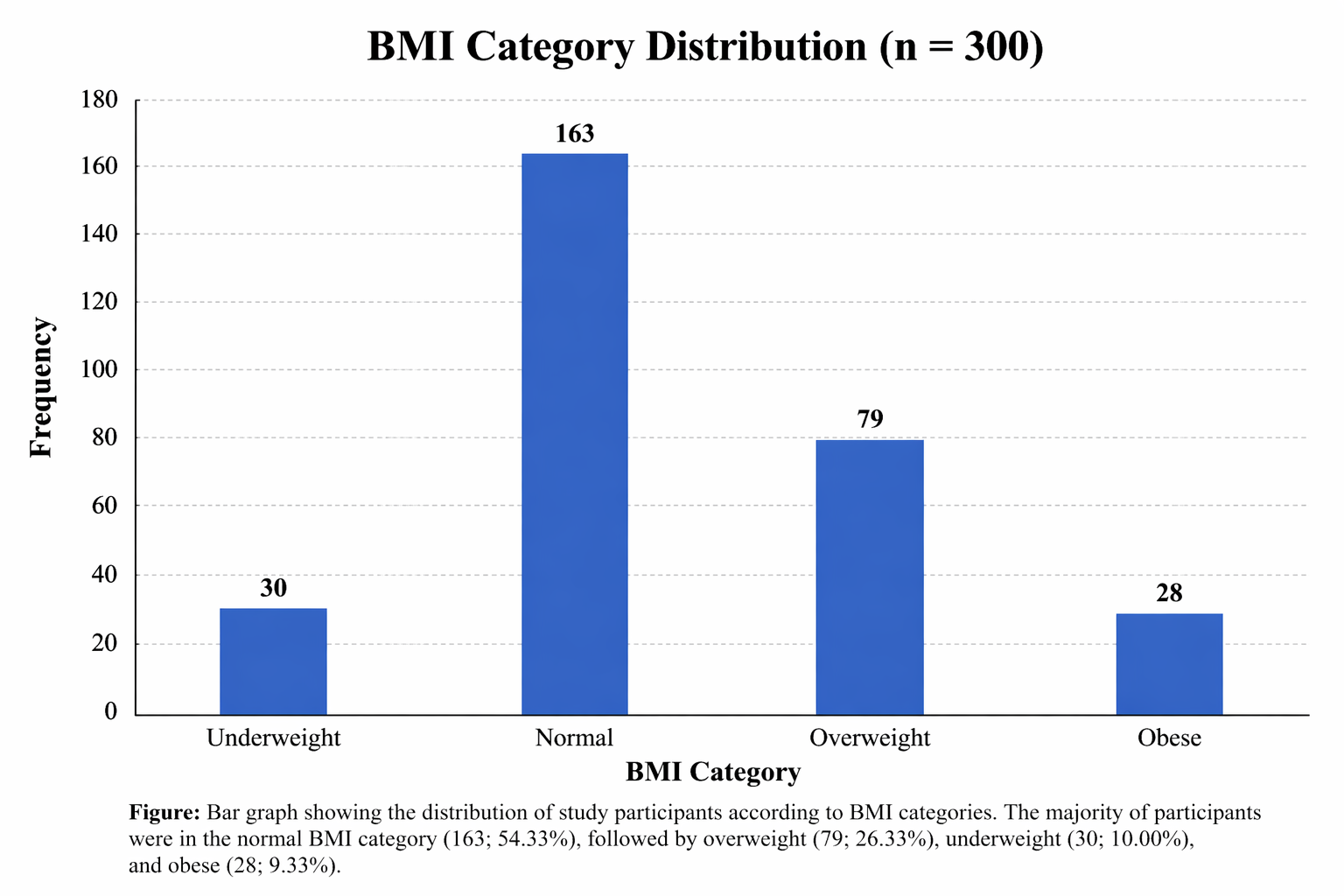
Table 1 . shows the distribution of study participants according to BMI categories. The majority of participants were in the normal BMI category (163; 54.33%), followed by overweight (79; 26.33%), underweight (30; 10.00%), and obese (28; 9.33%).
| BP category | Frequency (n=300) | Percentage (%) |
|---|---|---|
| Normal (SBP <120 mm Hg, DBP < 80 mm Hg) | 194 | 64.7 |
| Pre-hypertension (SBP 120-139 mm Hg, DBP 80-89 mm Hg) | 98 | 32.7 |
| Stage 1 hypertension (SBP 140-159 mm Hg, DBP 90-99 mm Hg) | 8 | 2.7 |
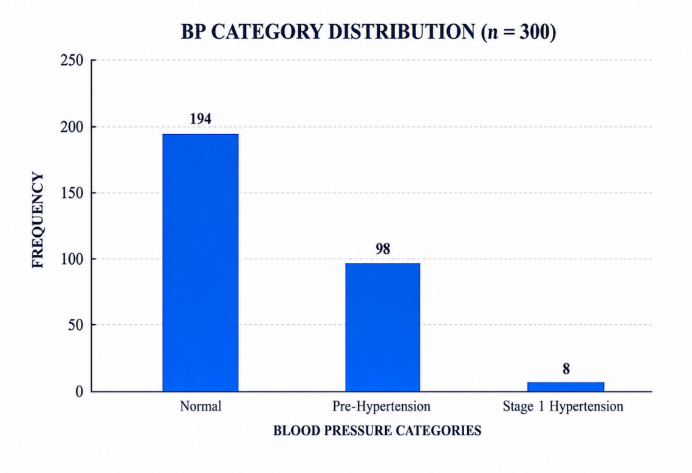
Table 2 shows the distribution of study participants according to blood pressure (BP) categories. The majority of participants had normal blood pressure, with a frequency of 194 (64.7%). Pre-hypertension was observed in 98 participants (32.7%), while 8 participants (2.7%) were falling in the stage 1 hypertension category. This indicates that most of the study population had normal or high normal blood pressure.
| Variable | K-S test | p-value |
|---|---|---|
| BMI | 0.73 (300) | 0.01 |
| SBP | 0.151 (300) | <0.001 |
| DBP | 0.125 (300) | <0.001 |
The Kolmogorov–Smirnov test was used to assess the normality of BMI, systolic blood pressure (SBP), and diastolic blood pressure (DBP). BMI, SBP and DBP showed statistically significant deviations from normality (p<0.05); therefore, Spearman’s rank correlation was used to assess the relationship between BMI and SBP and between BMI and DBP. Statistical significance was set at p<0.05, and all tests were two-sided. The results of the normality assessment are presented in table 3 .
| Variable pair | Spearman’s rho | p-value |
|---|---|---|
| BMI and SBP | 0.674 | <0.001 |
| BMI and DBP | 0.681 | <0.001 |
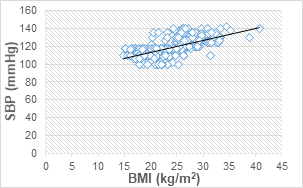
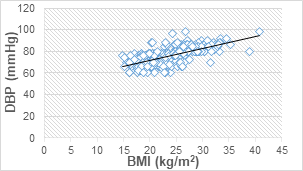
Spearman’s rank correlation analysis showed a moderate positive correlation between BMI and systolic blood pressure (rho = 0.674, p<0.001). Similarly, BMI also showed a moderate positive correlation with diastolic blood pressure (rho = 0.681, p<0.001). These findings indicate that higher BMI was positively associated with higher systolic and diastolic blood pressure among the study participants. The results are presented in table 4 , while the corresponding scatter plots are shown in figures 3 and 4 .
Discussion
Obesity and hypertension are increasingly being recognized as major public health concerns among young adults. Medical students may be exposed to factors such as prolonged study hours, sedentary behavior, irregular dietary habits, altered sleep patterns and academic stress, which may influence body weight and blood pressure.
In the present study, the majority of participants belonged to the age group of 19 years (39%), followed by 18 years (34.33%). The mean age of the participants was 19.02 ± 0.97 years. This age group is important because risk factors for future cardiovascular disease often begin during these years. Previous studies have also emphasized that elevated BMI and blood pressure during adolescence tend to persist into adulthood and increase the risk of later cardiovascular morbidity [9].
Female participants constituted 74.33% of the study population, while males accounted for 25.67%. Previous studies have reported sex-related differences in BMI and blood pressure, with differences in body fat distribution, sex hormones and cardiovascular regulation proposed as possible contributing factors [10].
More than half of the participants (54.33%) had normal BMI. However, 26.33% were overweight, 9.33% were obese, and 10% were underweight. The mean BMI was 23.46 ± 4.55 kg/m2, indicating that a considerable proportion had excess body weight. Similar findings have been reported among medical students in India and other countries [11,12].
Several factors may explain the rising prevalence of overweight and obesity among medical students, including prolonged study hours, reduced physical activity, irregular meal timings, emotional stress, inadequate sleep and sedentary behavior. Breakfast skipping, low fruit and vegetable intake and frequent fast-food consumption are also common [13,14]. Low physical activity, urbanization and changing lifestyle patterns among college-going students including medical students are substantial contributors to increasing obesity prevalence [15].
Regarding to blood pressure, 64.67% participants had normal blood pressure, whereas 32.7% were pre-hypertensive and 2.7% had their BP readings in the category of stage 1 hypertension. The mean systolic and diastolic blood pressures were 118.19 ± 9.47 mmHg and 75.99 ± 9.60 mmHg, respectively ( Table 2 ). The proportion of pre-hypertensive individuals is clinically important because elevated blood pressure during young adulthood increases future cardiovascular risk. Similar findings have been reported among undergraduate medical students and Indian young adults [16,17,18]. Academic stress, heavy workload, sleep deprivation and psychological pressure may contribute to elevated blood pressure in medical students [19].
A statistically significant positive correlation was observed between BMI and systolic blood pressure (rho = 0.674, p < 0.001) as well as between BMI and diastolic blood pressure (rho = 0.681, p < 0.001), indicating that blood pressure increased with increasing BMI ( Table 3 , Table 4 ).
The observed association between BMI and blood pressure may have several physiological explanations reported in previous literature including sympathetic nervous system activation, insulin resistance, activation of the renin–angiotensin–aldosterone system (RAAS), sodium retention and endothelial dysfunction [20,21].
Conclusion
The study demonstrated a statistically significant moderate positive correlation between BMI and systolic blood pressure as well as between BMI and diastolic blood pressure, indicating that blood pressure increased with increasing BMI. This highlight the importance of early screening and preventive health measures among medical students. Health education promoting balanced diet, regular physical activity, stress management, adequate sleep and tackling of sedentary behavior may help reduce the future burden of obesity and hypertension especially in medical and health sciences students.
Limitations of the study
The cross-sectional design of the study does not allow determination of a temporal or causal relationship between BMI and blood pressure. The participants were recruited from first-year undergraduate MBBS and Allied Healthcare programs at a single institution in Punjab; therefore, selection bias cannot be excluded and the findings may have limited generalizability to other young adult populations. Blood pressure was assessed only at one point of time during the study period, and measurement variability cannot be completely excluded despite standardized measurement procedures. Obesity assessment was based on BMI alone, which does not accurately reflect body-fat distribution or visceral adiposity. Potential residual confounding lifestyle and other factors may also be present, as these variables were not included in the present analysis.
Future implications
Studies involving larger and more diverse groups of young adults may provide findings that are more representative of the general population. Longitudinal studies may help in understanding the long-term potential causal relationship between BMI and blood pressure. Future research can include waist circumference, waist–hip ratio and body fat percentage for a more comprehensive evaluation of obesity and cardiovascular risk. Lifestyle-related factors including dietary habits, physical activity, stress, sleep quantity and quality, and screen exposure time should also be assessed in greater detail. Early screening programs and preventive health interventions among young adults may help reduce the future burden of obesity, hypertension and cardiovascular diseases.
References
- Gundogdu Z. Relationship between BMI and blood pressure in girls and boys. Public Health Nutr. 2008;11(10):1085-1088. [Crossref] [Pubmed]
- Lindholt JS, Søgaard R. Population screening and intervention for vascular disease in Danish men (VIVA): a randomised controlled trial. Lancet. 2017;390(10109):2256-2265. [Crossref] [Pubmed]
- Sharda K, Saxena P, Yadav SK, Sharma A, Gurjar M, Dayama N, Kashnia R. To estimate the prevalence of obesity and high blood pressure among undergraduate students at a university medical institution in North India. J Assoc Physicians India. 2023;71(11):30-35. [Crossref] [Pubmed]
- Gopalakrishnan S, Ganeshkumar P, Prakash MV, Christopher, Amalraj V. Prevalence of overweight/obesity among the medical students, Malaysia. Med J Malaysia. 2012;67(4):442-444. [Pubmed]
- Waseem SM, Bano R. Blood pressure measurement in overweight, underweight and normal BMI undergraduate students of a private medical college: Correlation of BMI with blood pressure. Int J Res Med Sci. 2017;5 (7):2921-2925. [Crossref]
- NCD Risk Factor Collaboration (NCD-RisC). Worldwide trends in hypertension prevalence and progress in treatment and control from 1990 to 2019: a pooled analysis of 1201 population-representative studies with 104 million participants. Lancet. 2021;398(10304):957-980. [Crossref] [Pubmed] [Pubmed Central]
- Rahmouni K, Correia ML, Haynes WG, Mark AL. Obesity-associated hypertension: new insights into mechanisms. Hypertension. 2005;45(1):9-14. [Crossref] [Pubmed]
- Katzmarzyk PT, Srinivasan SR, Chen W, Malina RM, Bouchard C, Berenson GS. Body mass index, waist circumference, and clustering of cardiovascular disease risk factors in a biracial sample of children and adolescents. Pediatrics. 2004;114(2):e198-e205. [Crossref] [Pubmed]
- Yang L, Sun J, Zhao M, Liang Y, Bovet P, Xi B. Elevated blood pressure in childhood and hypertension risk in adulthood: a systematic review and meta-analysis. J Hypertens. 2020;38(12):2346-2355. [Crossref] [Pubmed]
- Hall JE, do Carmo JM, da Silva AA, Wang Z, Hall ME. Obesity-induced hypertension: interaction of neurohumoral and renal mechanisms. Circ Res. 2015;116(6):991-1006. [Crossref] [Pubmed] [Pubmed Central]
- Nigam M, Verma P, Gupta P. IJCM_179A: Prevalence of overweight and obesity among M.B.B.S students. Indian J Community Med. 2024;49(Suppl 1):S52. [Crossref] [Pubmed Central]
- Shafiee A, Nakhaee Z, Bahri RA, Amini MJ, Salehi A, Jafarabady K, Seighali N, Rashidian P, Fathi H, Esmaeilpur Abianeh F, Omran SP, Bakhtiyari M, Alirezaei A. Global prevalence of obesity and overweight among medical students: a systematic review and meta-analysis. BMC Public Health. 2024;24(1):1673. [Crossref] [Pubmed] [Pubmed Central]
- Ackuaku-Dogbe EM, Abaidoo B. Breakfast eating habits among medical students. Ghana Med J. 2014;48(2):66-70. [Crossref] [Pubmed] [Pubmed Central]
- El-Gilany A, AbdelHady D, Damanawy R. Consumption and knowledge of fast/junk foods among medical students, Mansoura university, Egypt. TAF Prev Med Bull. 2016;15(5):440-445. [Crossref]
- Pramod P, Siji VS, Amma KR, Mendz AM, Prajwal, Vaishnavi, Ruksana. Physical activity pattern among undergraduate medical students in a rural medical college in Southkerala: A cross-sectional study. Indian Journal of Public Health Research and Development. 2024;15(1):254-258. [Crossref]
- Chattopadhyay A, Taraphdar P, Sahu BK, Maulik S, Ghosh R, Sinha A, Biswas M. A study on prevalence of hypertension and its related risk factors among undergraduate medical students in Kolkata. IOSR J Dent Med Sci. 2014;13(11):1-7. [Crossref]
- Khan ZA, Qureshi U, Khan T, Goel S. Change in the prevalence of prehypertension and hypertension among young Indians aged 15-24 years between 2015-16 and 2019-21: Insights from nationally representative surveys. PLoS One. 2025;20(4):e0319274. [Crossref] [Pubmed] [Pubmed Central]
- Hazari MA, Arifuddin MS, Hussain HZ, Fatima F, Kahkashan N. Central blood pressure parameters in young adults with and without parental history of hypertension. Ann Med Physiol. 2017;1(1):16-21. [Crossref]
- Abdulghani HM, AlKanhal AA, Mahmoud ES, Ponnamperuma GG, Alfaris EA. Stress and its effects on medical students: a cross-sectional study at a college of medicine in Saudi Arabia. J Health Popul Nutr. 2011;29(5):516-522. [Crossref] [Pubmed] [Pubmed Central]
- da Silva AA, do Carmo J, Dubinion J, Hall JE. The role of the sympathetic nervous system in obesity-related hypertension. Curr Hypertens Rep. 2009;11(3):206-211. [Crossref] [Pubmed] [Pubmed Central]
- Brosolo G, Da Porto A, Bulfone L, Vacca A, Bertin N, Scandolin L, Catena C, Sechi LA. Insulin resistance and high blood pressure: Mechanistic insight on the role of the kidney. Biomedicines. 2022;10(10):2374. [Crossref] [Pubmed] [Pubmed Central]